North Shore Oahu
The North Shore of Oahu is surfing’s Mecca, the most sacred place on Earth for surfers. Some are scared of this place, some are inspired by this place, but all revere this place. From Pipeline (the most famous and deadliest wave on Earth) to Sunset (the birthplace of power surfing), from Waimea Bay (the original big wave) to Rocky Point (high-performance epicenter) — Oahu’s North Shore is nicknamed the “Seven Mile Miracle” for good reason, especially during the winter. It is the one pilgrimage every surfer should make at least once in their lifetime.
The Waves


Sunset Beach
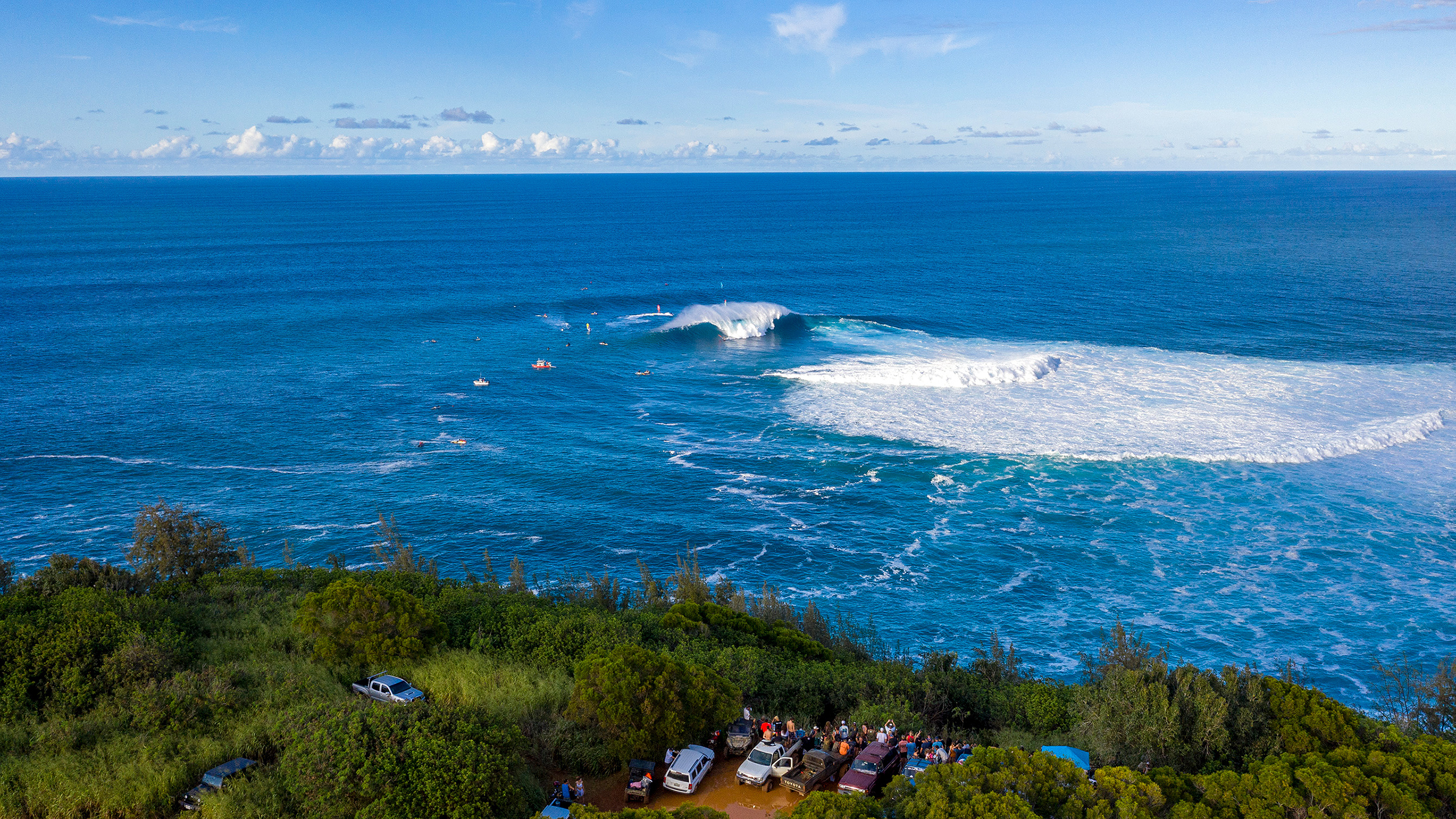
While Sunset is no longer the great proving ground for North Shore rookies that it once was, it still truly is one of the world's great and thrilling surf zones. The Sunset shoreline is a long curve starting in front of Kammieland reef to the west, sweeping past a broad deep-water channel, and straightening out in a line past Sunset Point to the northeast. Not far off the beach is Val's Reef, a quirky semi shore-dumping peak. Outside of Val's, there's a deep pit some 60 yards across, then a shallow mushroom shaped reef which links across to the point. A couple hundreds yards farther out lies the main reef area -- a series of very broad, long fingers of lava that slope gradually out to sea to the west-northwest. These lava fingers, with their swell refracting ability, are responsible for the characteristic peaked shape of good Sunset, especially in a west swell. Sunset Point breaks up to around six feet in wedgey chunks that sometimes reform into a wall across the uneven inside reef. It reflects Sunset's general nature, in that wave selection can be difficult; you'll either find yourself scratching after peaks that suddenly blunder off into deep water, or paddling farther and farther north trying to get a hold of the mirage-like rights peeling down from Backyards. Sunset proper starts to wake up around 6-8 feet, and can occasionally hold 12-15 feet in flawless northwest swell conditions. The style of ride is highly subject to swell direction: Anything north of northwest will be an unpredictable, lumpy wall sectioning down toward a possible barrel through the inside. Anything farther west will be a powerful, drawing peak with a sometimes critical takeoff and a big, open pocket. Takeoff points vary, too: The north direction might break at a dozen different places as it folds crosswise over the reef fingers; the west is more predictably wedged up, but more likely to punish the unwary. Get caught inside on a bigger west swell day and you can say goodbye to your leash or your board -- or maybe both. Smart surfers don't rush their sessions at Sunset; they cruise for a half hour, getting the rhythm, then go in hard and don't hesitate in their wave choice. The entire lineup is very exposed to wind, and stronger trades blow straight up the face of west swells, which makes that takeoff just a little trickier. Water from the vast swell bombardment gathers in the deep hole outside Val's Reef and floods out to sea to the west. This is the famed Kammieland Rip, and it's a good reason to hope the trades are blowing, because if they're not -- and a big west swell is running -- that rip will turn around, flow into the break, and start dragging you past the peak and into a world of pain. Parking is ad hoc straight off the highway and facing down to the beach, or in a small parking lot recently built across the street by the city. This lot boasts a bathroom block, but there's very little else in the way of showers, rinse-off taps, etc. Porta-potties are erected during contest time on a roughly paved area behind the first Sunset Point houses. Click here for Surfline's Sunset Spot Check with Pancho Sullivan

Rocky Point
In the Off-The-Wall class when it comes to photo action, Rocky's is not at all in OTW's class as a hoax. It's a flat curving reef that is about 250 yards wide and it's perhaps the most consistent wave on the North Shore, breaking up to six feet-plus in any winter swell direction. Rocky's somehow satisfies even its most frightening crowds with a range of waves -- from soft walls to clean barrels to crazy shorebreak air sections. While Rocky Point was Heavy Local Spot Number One in the 1970s, today the only real crazy days happen in contest season, when small days turn into the surfing's most vicious recorded photo sessions. Dozens of photographers and filmers can be found at one time on the rock/sand beach, shooting away at a crowd of over 130 local grom rippers, Brazilians, Australians, mainlanders, Europeans, and just about everyone else. Rocky's provides several different takeoff points in different conditions. We'll begin from the west side, close to Pupukea: 1. A series of peaks, mainly rights, in north-to-northwest swells, which sometimes end in a closeout, but often hold up for nice walls and tubes. 2. A clearly defined right wall/left peak combination in west-to-northwest swells, with the left sometimes peeling almost across the length of the reef. 3. A good quality walling left peak forming in west swells, outside the middle of the reef which barrels or peels down toward the northern channel. (This is the prime Rocky's wave.) 4. A sharp, wedging left (and sometimes right) pitching off the northern fringe of the reef. 5. A sucky shorebreak reform left farther inside which is super fun for airs and small barrels. Click here for Surfline's Rocky Point Spot Check with Flynn Novak

Haleiwa
This is the traditional base camp for adventurers into the North Shore's fierce surf wonderland, the first well-known spot in the chain reaching north from Haleiwa town to Sunset Beach. Hundreds of renowned locals -- from the Aikau brothers to the Hos and Fred Patacchia, Mark Healey and Jamie Sterling -- learned the ropes in Haleiwa's shorebreak. This makes the place sound soft, but in fact Haleiwa beyond its easy range (six to eight feet) is a ferocious workout capable of kicking the crap out of anyone, no matter how accomplished. The main break at Haleiwa is a rough "V" shaped reef that forms a peak 300 yards off the beach and bowls in a hard right-breaking direction in a series of thick sections, ending in a closeout, known as Toilet Bowl. The wave is intensified by a fast-moving rip that draws water from the Avalanche reef flush-out and races right across the outer edges of Haleiwa's reef. At times, especially on bigger days, it can feel like you're riding a river rapid and not any kind of normal wave. This rip changes Haleiwa from a large, innocent wall into a truly exciting performance wave, and eventually into a fearsome monstrosity that wants nothing better than to suck a surfer too deep, then unload a freak set directly on his head. Smart surfers at Haleiwa learn to use the rip, not sweating the paddle out, waiting a few yards wide of the takeoff, then letting themselves be drawn into the pit for the waves they want. Not-so-smart surfers go straight to the takeoff spot, then spend the next 15 minutes paddling against the rip just to stay in position. As the swell backs away from its logical maximum -- around the 12-foot mark -- the wave loosens up and begins breaking on the shallower areas of reef, providing some deep tubes. Six to eight feet from the west/north-west is the wave's best direction -- too much north will be shadowed by Pua'ena Point. Swells no bigger than four feet make Haleiwa look like a full, semi-closed-out beachbreak; a left will begin to show its face from the middle of the reef, peeling back toward the harbor wall. On the inside a few yards out from the sand, a foot-high reform will give beginners something to play with. Click here for Surfline's Spot Check with Haleiwa locals Sean Moody and Joel Centeio.

Pua’ena Point
North towards the outermost corner of Haleiwa Harbor lies a wave suitable for tow-teams all the way down to keikis (grommets). When the surf is small, the inside will be cluttered with tourists on longboards going for their maiden North Shore surfs. And when the entire North Shore is stormy and maxing, the protected innards of the point provide a respite from all the outer reef mayhem, still dishing up plenty of quality, rideable surf. But when a clean, long-period north swell pushes through, that's when Pua'ena really comes to life. Big walls will steamroll off the outer tip of the point towards the harbor channel, making it a regular footers' dream come true.

Waimea Bay
Even when it's almost flat, Waimea is a fascinating stretch of water. The famous bay, set almost exactly halfway along the main North Shore strip, is less than a half-mile across, with a clearly defined rock point at the northern end and a long, jumbled pile of lava boulders bending well out to sea to the southwest. It lies at the mouth of Waimea Falls valley, which regularly flushes into the bay through an occasionally man-made channel. Other than that, Waimea is one of the North Shore's most pleasant and popular family beaches, its allure undamaged by the fact that hundreds of years ago the heiau overlooking it from the northeast was the site of human sacrifices. Waimea's outer waters are very deep, and thus clear of any cloud-breaking reefs. This means that a lot of long-interval swell energy is drawn away from the Bay by the flanking outer reefs at Alligators and Log Cabins. This can make the place appear deceptively calm early in a big swell. As the interval drops and the swell fills in, Waimea becomes a massive washing machine, with water flooding down both sides of the Bay and trying to clamber out toward the west. By contrast to all this mad aquatic activity, the actual takeoff zone can be quite mellow between sets. Rideable waves first begin to break when the swell reaches the six-foot mark on a section known as Pinballs -- a lumpy reef almost parallel with the tip of the Bay's north point. In clean northwest swells with a light tradewind blowing, Pinballs can be a lot of fun, with even the occasional tube section showing. As the swell grows beyond the ten-foot mark, some waves begin to peak and break just inside a big boil 80 yards out past Pinballs, providing a drop, a fat shoulder and some reform shots further in. At 15 feet, waves will break on the shallower regions of the true Waimea takeoff area -- a relatively flat lava rock ledge, another 50 yards or so outside the boil, that lurches abruptly up from the outer deep. It's the sudden appearance of this ledge, magnifying the challenge of a late drop that gives big Waimea its characteristic semi-freefall takeoff. The ledge slopes off rapidly to the west, but maintains a slight ridge out toward the north, sometimes (particularly in a north-northwest swell) forming a takeoff spot further out; this is known as "Eddie's Peak", named after the late Bay charger and lifeguard Eddie Aikau. After a sometimes complex and super exhilarating drop, the rider is faced with a flat shoulder and a mountain of whitewater, which can sometimes be pursued into the Pinballs section for a couple of turns. Toward the beach, waves will back off and reform into an extremely powerful shore dump, growing thicker and bigger toward the western end and sometimes showcasing a hideously tempting left barrel. Getting in and out is done through the "keyhole", Waimea beach's northeast corner close to the rocks, where the shoredump is smallest. Under 15 feet it's a cruise; on bigger days it requires a little timing, especially if you don't want to look like a goose in front of the large crowds that gather along the nearby roadside during large swells. Trying to come in through the shore dump farther down is not recommended; several surfers (including Ken Bradshaw) have made the Bay Loop -- the process of heading right back out to sea and around again in order to nail the keyhole exit -- famous. Click here for Surfline's Waimea Bay Spot Check with Mark Healey
Off-the-Wall
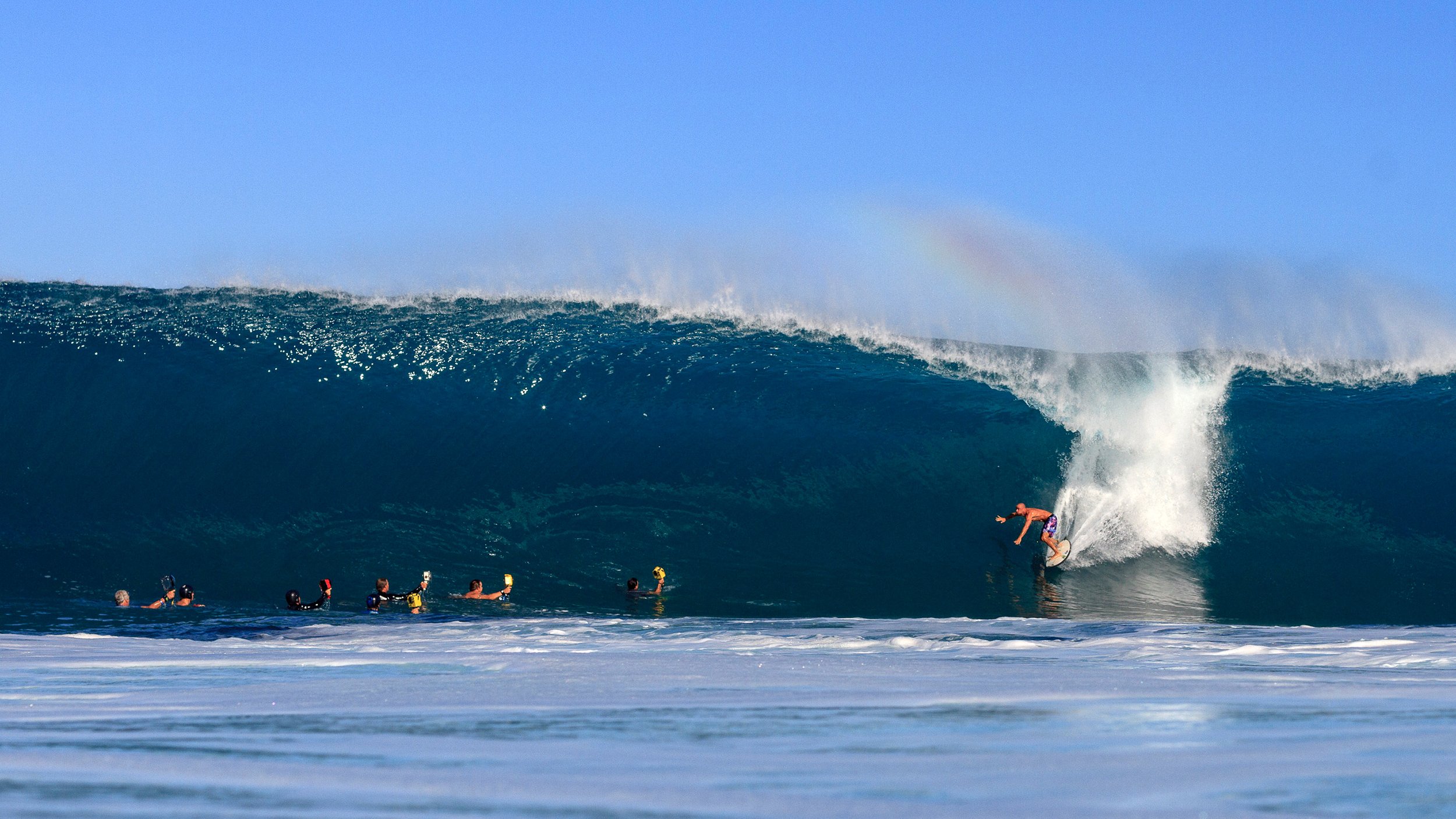
As close to a hoax as any famous wave of the past 30 years, Off-The-Wall (OTW) is a single slab of reef just to the west of Backdoor and Pipeline. Off-The-Wall can have its golden moments, however, and, in these days of crazy crowding, it is never overlooked, thus crowds -- especially pros looking to nab a cover-worthy photo in the witer -- are always a factor. The break's given name stems from a rock wall built next to a public right-of-way off Ke Nui road. In the water, OTW is separated from the Backdoor reef by a narrow, deep crevice, which blocks some swells from closing out across both breaks. The OTW reef is largely flat lava, with a mound of shallower reef near its northern edge. It is best in a slightly fractured 4-6 foot northwest swell. It's a wedging right, with some smaller lefts peeling back toward Backdoor. On precisely the right wave, OTW will produce a beautiful almond-shaped barrel; many waves will be caught and ridden to closeout point by the hopeful surfer before that ideal one is found.

Backdoor
Backdoor was somewhat ignored during Pipeline's first golden days in the 1970s. It makes you wonder how many heaving barrels roared right off the peak before everyone kind of clicked on it. The wave relies on a slight breaking up of swell lines from the northwest and a thin channel between the Pipe reef and Off-The-Wall. The broken swell allows a tapering wall, which hits square on the shallowest part of first reef and creates an intense, deep tube. Further inside, the reef gets shallower and actually pokes itself above the waterline here and there; dealing properly with the finish of a ride is very important. This is even more the case on larger days, when the unwary surfer might come out of the tube, start paddling, and be faced with a full-on major closeout set -- one of the North Shore's scariest moments.

Gas Chambers
Stuffed between Pupukea and Rocky Point, lay the unappreciated jewel known as Gas Chambers. On a good North or North-West swell, Gas Chambers will shovel into a thick mound of water and break -- first as an open-faced wave on the outside, then as a dredging barrel across the shallow, inside reef -- both left toward Rocky Rights and right toward Pupukea. On the biggest winter days, it is a throttling barrel its entire length. But on average, Gas Chambers is often the choice of surfers uninterested or unwilling to join the nearby performance packs at Pipeline and Rockies, thus throughout the winter season the crowd can be thick morning, noon and night. Nevertheless, Gas Chambers is often a great North Shore warm-up choice that provides rides and barrels that are as good as any punchy Hawaiian reef break.

Jocko's
Named after North Shore legend Jock Sutherland, Jocko's is a worthy left reef pointbreak, offering up a relatively easy take-off (compared to it's higher profile North Shore counterparts) and long rides. But don't be fooled into complacency -- when a big West or North-West swell fills in, Jocko's transforms into a proper and heavy left barrel. Also, at this size, the current here is notoriously vicious, so it pays to watch Jocko's for a few sets before paddling out in order to establish where the channel and take-off zone are. As with Chun's, Jocko's is a favorite of surfers looking to avoid the mobs just up Kam Highway. While this doesn't mean that the visiting surfer should exercise any less respect, it does mean that the overall vibe in the water is a little less intense.

Chun's
In winter, when the North Shore of Oahu is at its finest, there are few spaces left in the line-up. However, Chun's Reef, while hardly empty, is a good place to check out for intermediate surfers not ready for the big leagues just up Kam Highway, or willing to brave the extreme crowds at spots like Haleiwa and Laniakea. Chun's is located between Jocko's and Waimea Bay, and is visible through a quick break in the beach front homes that line this stretch of coast along Kam Highway. Chun's offers both a left and right that break across an elbow of oftentimes shallow and sharp reef. The left can be a bit more shouldery and forgiving, since it spills into a relatively deeper section of water. The right can be a bit faster, though shorter, but it does get very shallow (and the current turbulent) on the inside. While the Chun's line-up might not be as intense as, say, Rockies, there will be plenty of local guys and girls out there ripping, so be respectful. If you do that, you'll score a few gems out there for sure.

Log Cabins
A twisted man's alternative to the Pipeline-to-OTW stretch, this 200-yard strip of sand and lava reef can change your life on the right day -- that is, if you're still alive at the end. Log Cabins runs directly to the west of a large pile of rocks, known imaginatively as Rockpile, that flanks the western end of Off-The-Wall. The beach is broad and flat, tucked away behind bushes lining the highway, which makes it one of the most appealing sand stretches on the North Shore. Swell hits Logs from all directions, but a west is drawn away toward Pipeline by the Outer Log Cabins reef refraction; a north does exactly the opposite, focusing into Logs with scary power. Some of the north will also be focused onto the Rockpile peak reef some 250 yards offshore, a difficult and sometimes very dangerous wave that should be avoided by all but the highly experienced, especially in swells over eight feet. Wedged-up peaks hit the Logs shoreline largely at random, and the bottom varies hugely -- flat lava tabletops sit right next to pure sand, which in turn can peel away in an instant to reveal hideous rock spikes. It's this uneven bottom quality that makes Log Cabins even heavier than Pipe. Huge tubes can turn into six-lipped death bowls -- seemingly innocent sections will suddenly hit a rock ledge and double-suck, then back off and land flat, smashing everything in range. It is a great training ground for the Masters, if you're a super skilled pro, because after this place at eight feet, the Banzai will really be a cakewalk. On smaller days, Logs can forget its evil nature and produce a skatepark-like wave for the many bodyboarders who spill over from the breaks to the north.

Laniakea
About two and a half miles north of Haleiwa, Laniakea, or Lani's, can be seen clearly from the Kamehameha Highway. It's a broad, right-breaking reef where the main takeoff zone is 400 yards offshore. It faces a reef/sand beach and a dusty informal parking lot. The reef is really just one half of a massive lava hammerhead that flanks a small point of land (the other half makes up the left-breaking reef known as Jocko's, a quarter mile to the northeast). Lani's is best accessed through a channel that runs out next to the point and cuts partway through the hammerhead, allowing a quick paddler to cross the thinnest point between closeouts. Ideal swell direction for the reef is north, allowing swells to wrap down the line in a long, fast series of bowling sections. On most winter days, Lani's breaks up the typical smaller northwest winter swells into a series of peaks that are considerably easier to ride (and often less crowded) than the higher-profile breaks past Waimea. However, when a rare, straight north groundswell strikes, Laniakea reveals her true face as perhaps the North Shore's finest wave. Outrageously fast, with some super hollow sections, it requires a fine degree of judgment and a willingness to be picked off by wide swinging sets, which are quite capable of returning the surfer to the original paddle-out point. Shallow areas on the inside reef will get you if your eyes aren't peeled. During those big norths, a strong rip swings off the end of the break to the west; this should be avoided, especially if you're boardless. Some water pollution can be detected from a runoff pipe halfway out along the point during rainier months; there have also been tiger shark attacks in the area, usually coinciding with the rainier months.
Rockpile
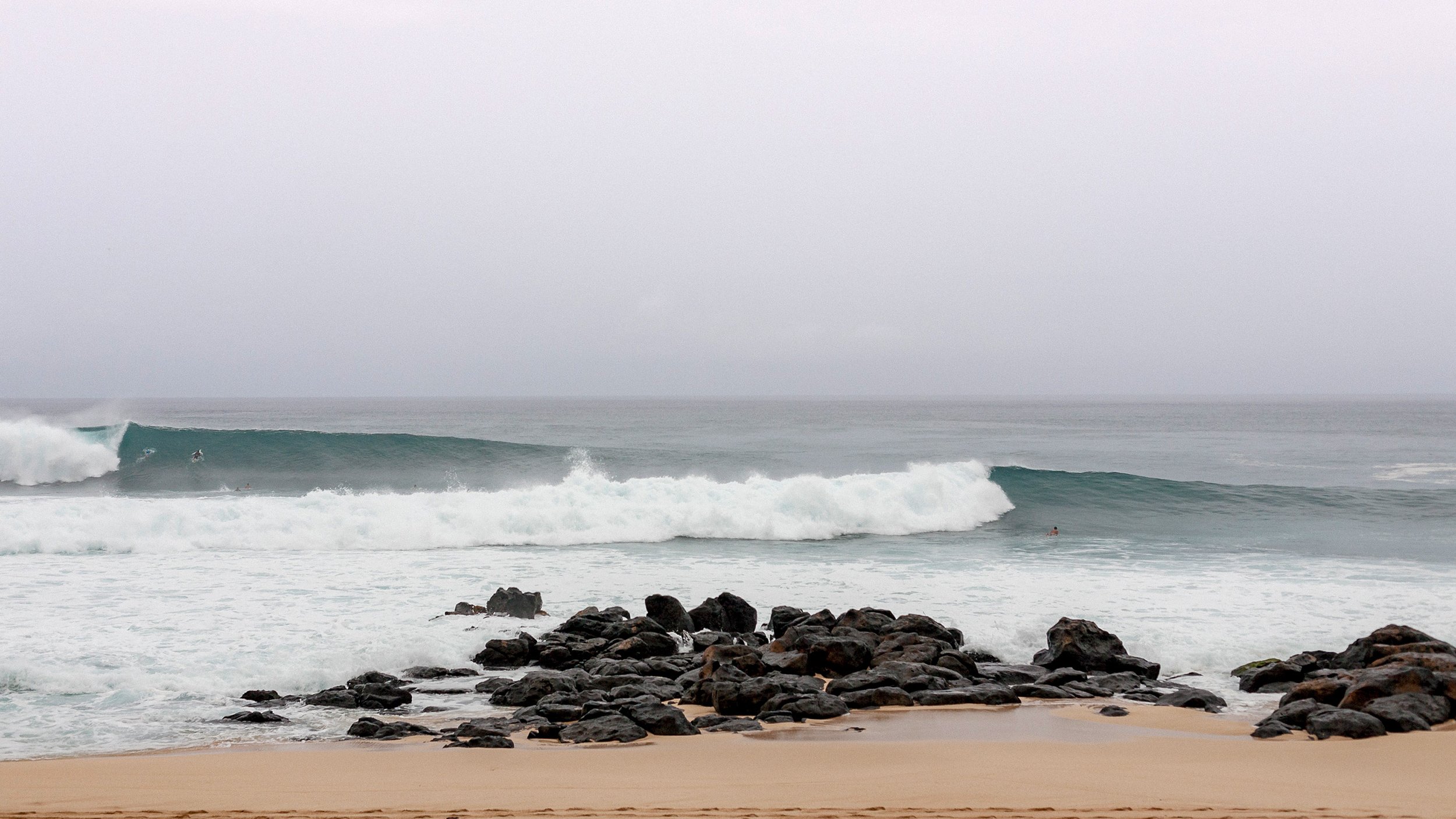
The stacked lava boulders on the shoreline might give away its namesake, but don't be fooled -- you can (and often will) be pile-driven into rocks while surfing here. Flanked by its neighbors Off-the-Wall and Log Cabins, Rockpile is often overlooked and overshadowed, but it shouldn't be underestimated in the least bit. Rockpile is one of the North Shore's biggest and meanest waves and commands respect from four feet up to, well, as big as you want it. Experts and kamikazes only!
Velzyland
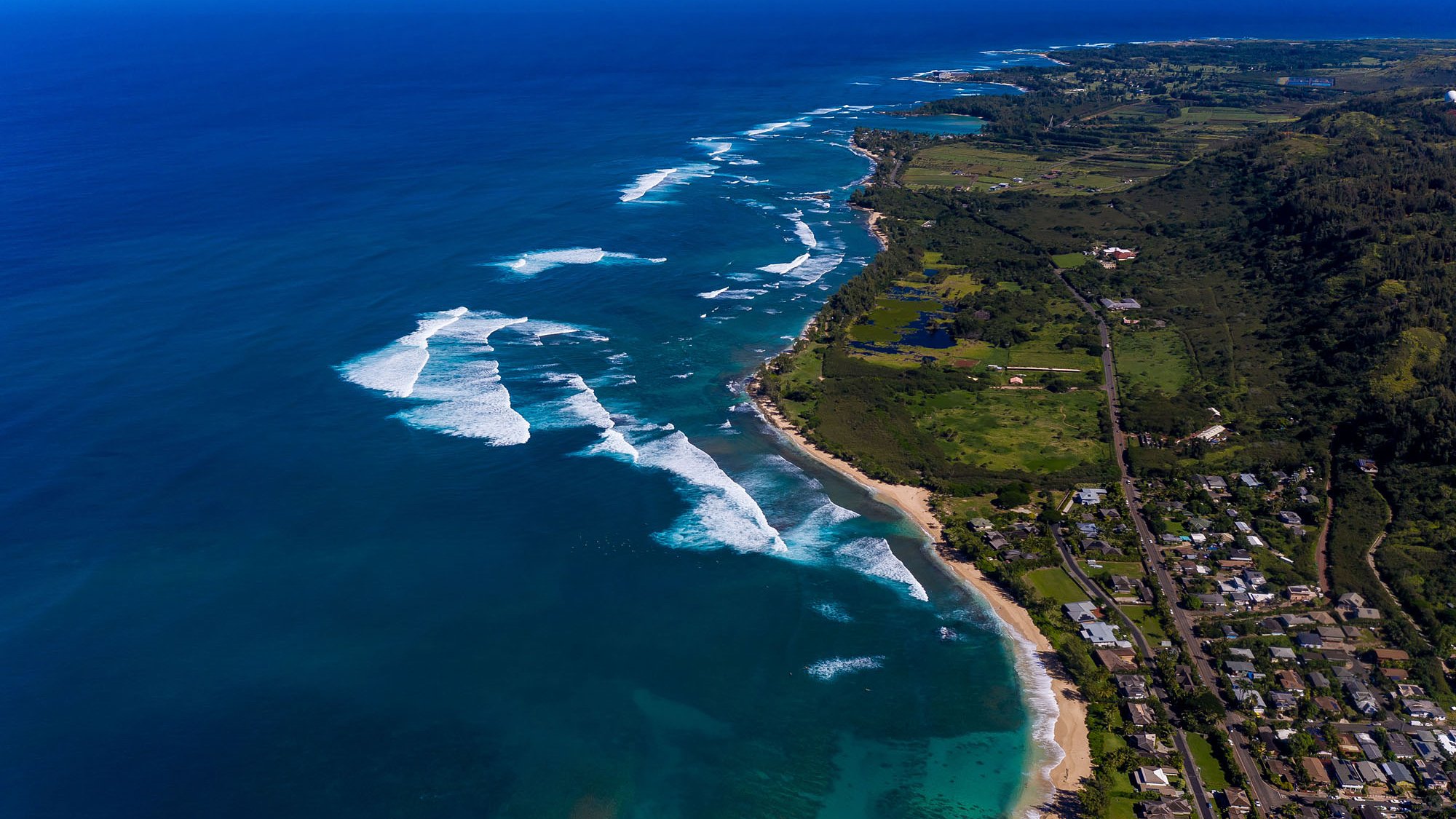
Velzyland is possibly the ultimate North Shore local spot. Access is very difficult, crowds are super localized, the wave very sensitive, and your chances of a good session relate directly to your level of respect for the local surfing community. Named after veteran California surfer/shaper Dale Velzy, V-Land is like a miniature Sunset Beach, set in the big bay just beyond Backyards. At times, it can be hard to even see the break in the welter of water moving around the bay. V-land is shaded by Phantom Reef, the classic big-wave location which lies about a mile straight out to sea. Phantom's focuses swell into the bay, where most of it ends up connecting across to V-Land's neatly defined, shallow lava ledge. On a good day, it's a bowling barrel with fun, rippable sections -- a perfect training ground for the best North Shore groms, who take full advantage of the wave (and their status). Occasionally, you'll see Sunset Point locals like Brian Surrat or Eddie Rothman, surfing it up with their kids. At other times, the break will seem weirdly empty, then the crowd will hit and you'll realize school's out for the afternoon. Many visitors will prefer to leave V-Land to the locals, who try their best to be generous at other breaks along this ridiculously congested coastline.

Turtle Bay West
It used to be a haven from the North Shore crush, but during the winter months these days, the right breaking in the shadow of the colossus Turtle Bay Resort on the eastern edge of Kawela Bay is a bonafide surfing hot spot. Though considered mellow by North Shore standards, Turtle Bay West can get really good on a proper North swell, even offering up some worthy barrel sections. Meanwhile, around the peninsula and on the east side of the resort, Turtle Bay East turns on during a proper North or North-West swell. It's also one of the more scenic surf spots on Oahu, with the white sand and lush Bayview and Kaihalulu beaches stretching eastward from the resort.

Even if you don’t surf, you can show up here in November and December and see the world’s best surfers do their thing at iconic waves like Pipe, Sunset and Waimea.

When to Score & Seasonal Surf Data
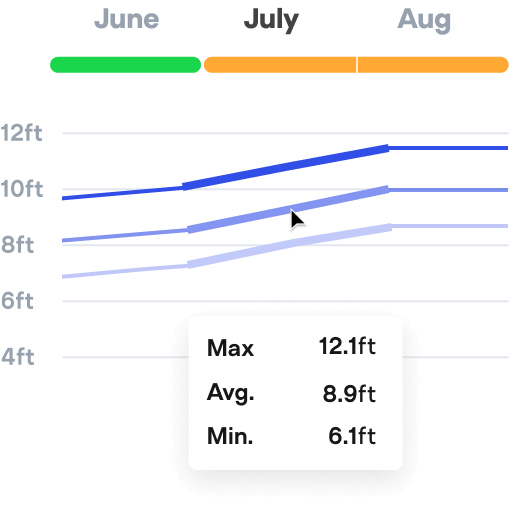
Know exactly when to score — powered by our expert historical forecast data.
Decades of spot-specific swell info — combined with forecaster insights — show your best chance to score, found only on Surfline.
Time to score

Forecaster reports
Seasonal Surf Data

The North Shore According To...
Jamie
O’Brien
Pipe specialist and YouTube star deconstructs the Seven Mile Miracle.
What makes the North Shore such a special destination for surfers?
What makes the North Shore such a special place is that it’s pretty much surfing’s Mecca. Even if you don’t surf, you can show up here in November and December and see the world’s best surfers do their thing at iconic waves like Pipe, Sunset and Waimea. Hawaii’s the birthplace of surfing, and Pipeline is here. That’s the most dynamic wave in the world.
What kind of waves can visiting surfers expect?
You can expect a wide range of surf. Hawaii’s not always what it’s built up to be. We have a lot of good, fun waves that are user-friendly, and we also have spots that will take your surfing to a whole different level. There’s that diversity here: mellow, fun waves for those just learning to surf to the top of the food chain at Pipe.
What’s the vibe?
The vibe’s good. I think it’s better than ever. Local businesses are able to thrive again. It feels like it’s a new world and we have to be more appreciative of what we have than ever. Coming out of the pandemic, the vibes are high in Hawaii. Everyone’s happy, they’re getting outdoors and surfing more and hanging out with their friends again.
What should surfers bring?
It all really depends on how you plan to execute your Hawaii trip. Bring reef-safe sunscreen because we don’t want to kill our reefs. Bring a smile and a positive attitude. Bring a few boards because boards aren’t cheap in Hawaii. Just bring the good vibes with you.
When is the best time to score?
November and December are great. Then you have the late-season stuff in February and March. The later the season gets, the less opportunity you may have to score bigger waves and see the North Shore really in action. You know, a lot of people come here in the summer and are like, “Where’s Pipeline?” If you want to see Pipeline, come in December.
What else is there to do when you’re not surfing?
It’s always cool to snorkel and go check out the reefs when it’s flat to see what you’re surfing over, and you’ll see some of the marine life here. Sharks Cove is a good one for cave dives. It’s a marine sanctuary, too, so it’s beautiful. Hikes are always awesome. Waimea Valley is beautiful and a great way to learn about Hawaiian history. You can go full tourist and go to the Polynesian Tourist Center. It’ll give you a taste of a luau. Hawaii is hikes, waterfalls, surfing and snorkeling… And getting a suntan.
What’s your favorite local cuisine?
Pupukea Grill is always amazing. From the staff to the food, it’s all excellent. Foodland is just Foodland, it’s overpriced. I think their best deal is $6 for a pretty big sandwich. The vinegar chicken there is really good, but really bad for you. Wailua Bakery and Nalu Health Bar in Haleiwa are both amazing.
Where can people learn to surf?
I recommend my surf school at Turtle Bay. It’s called Jamie O’Brien Surf Experience, and we do everything from turtle safaris to advanced lessons. We’re the only surf school that operates out of Turtle Bay. It helps keep the guests safer and get them more waves.
What are some things people should be aware of when it comes to local culture and customs?
Don’t drive fast. Drive slow in the neighborhoods. Smile. It’s like this: to receive aloha you have to give aloha. Whether that’s through a smile or your positive energy, or your etiquette in the water and on land, spreading aloha is a very transparent way to be here. It’s respect, and showing that you care for the place and the people.
Travel Essentials

Culture & customs
Perhaps more so than any other surf zone in the world, the North Shore is all about respect. People live humbly here – hence why they call it the “country,” as opposed to the hustle and bustle of Honolulu, aka “town” – and they deal with thousands of visiting surfers every season. So, it’s important to keep that in mind when traveling there. You are a visitor, act accordingly – smile, wait your turn in the lineup, know your limits, clean up after yourself, take your slippers off when you enter someone’s home. There are rules on the North Shore of Oahu; follow them and you will be welcomed – or at the very least, tolerated – on the Seven Mile Miracle.
Local scene
Every winter, surfers and surf fans and surf lenspeople of all sorts flock here. So yeah, it’s crowded. Nearly every day, at every spot, all season long. Mutual respect and the spirit of aloha creates order within the chaotic, beautiful spectacle of it all.
What to bring
Gunnier boards for bigger waves (like Sunset), high-performance boards for rippable waves (like Rocky Point), longboards or soft-tops for playful waves (like Turtle Bay). All your tropical surf trip necessities and maybe even your own snacks (everything’s more expensive in Hawaii). One thing you don’t wanna bring: your ego. Lock it up and leave it at home.
Also: Our amazing partners over at FCS have curated a collection of fine products for your next surf trip. Check it here.
How to get there
From Honolulu International Airport, it’s about a 45-minute to an hour drive to the other side of the island and the North Shore. Driving over the hill near the Dole pineapple plantation and getting your first glimpse of the waves charging in from deepwater towards the coast — that view will give you chicken skin every single time.
Downtime
If you still have energy after surfing, there’s a number of hikes that will take you to higher elevations and give you a great, panoramic view of all the surf spots and the swells rolling in. The Banzai Skatepark offers the opportunity for some concrete shredding, while all kinds of tours operating out of Haleiwa Harbor will take you fishing, shark diving and more. Or, if you’re feeling social, there’s always the pool bar at the Turtle Bay Resort.
Quick Tips
Travel Time
LAX: 6 hrs
JFK: 11 hrs
Heathrow: 17 hrs
SYD: 10-15 hrs
Connectivity
WiFi and cell service basically everywhere.
Currency
USD, Aloha.
Avg. cost of...
Cup of coffee: $2.00
Lunch: $12.00
Beer: $5.00
Hotel room: $700 (not much hotel options on this side of the island.)
Visa Requirements
No travel visa necessary for US visitors. Australian travellers can visit Hawaii for up to 90 days without obtaining a visa under the Visa Waiver Program.
Drinking water quality
Safe to drink, primarily local rainwater run through filtration.
Hazards
Paddling straight to the peak, overestimating your limits, ignoring local lifeguards, the parking lot (and prices) at FoodLand.
Cash, card, crypto
Pretty much everywhere will accept debit or credit cards, but it’s always good to carry some cash. ATMs are available for withdrawals in most urban centers.
Explore Other Zones



Have feedback on this zone? Let us know [email protected]
Questions about booking with Surfline Travel? Check out our FAQs