Sunset Cliffs
San Diego Surf Spots
Surf Guide
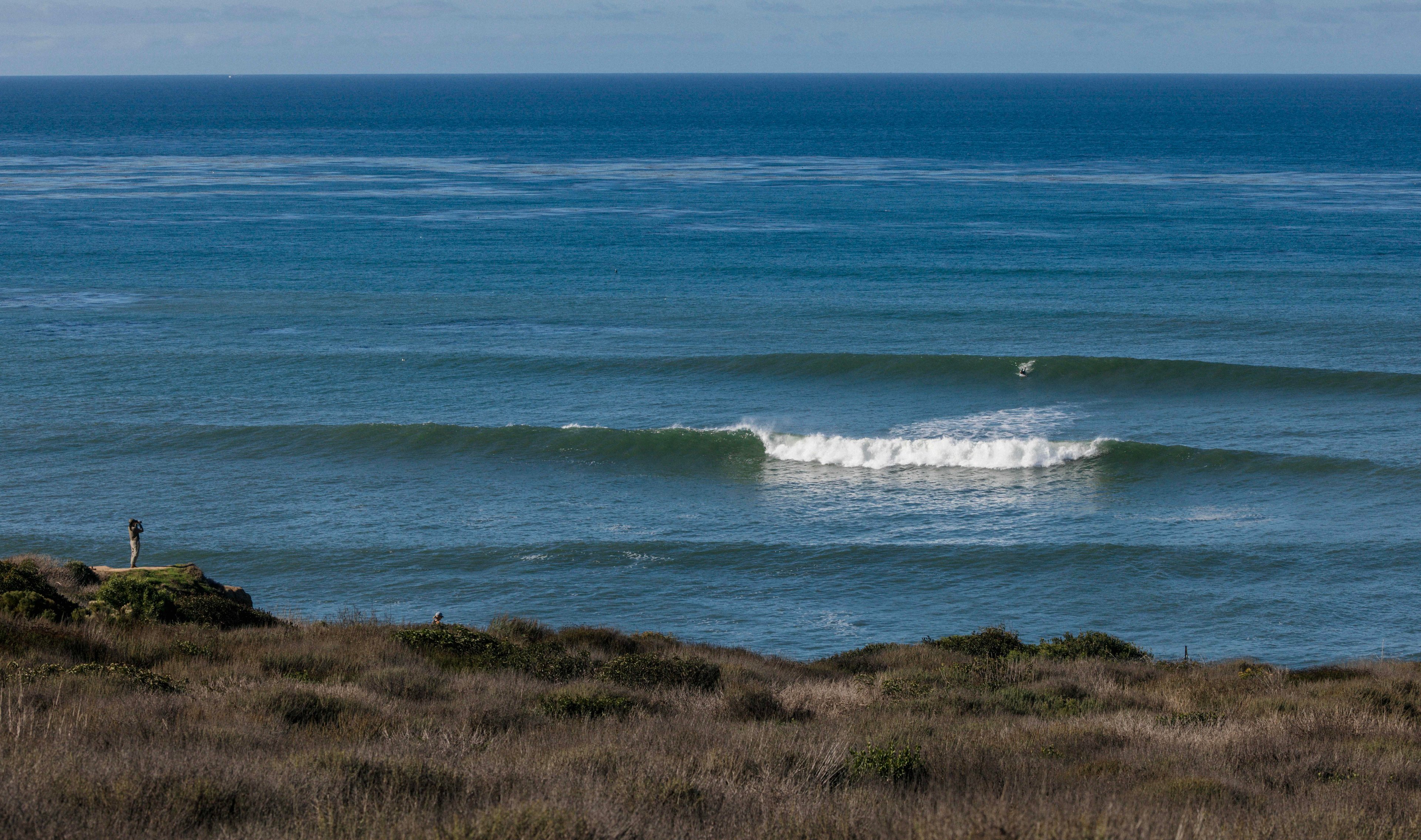
At the crusty edge of a city of 1.2 million, the bucolic atmosphere of these reefbreaks is impressive. Beginning in a small neighborhood, the cliffs extend into the chaparral-carpeted U.S. Naval Reservation of Point Loma. A thick kelp bed several hundred yards outside the breaks smoothes the bump out of westerly wind, making it an ideal place to surf when the beaches are blown out. To access most of these breaks, rocky cliffs -- and, often, exposed reef -- must be navigated. Long paddles mired by sea grass and kelp are the norm. The Cliffs produce waves during fall, winter and spring on west and northwest swells, with a couple of southwesterly exceptions. There are many head-high and overhead days, but most of these spots max out before reaching 8 feet. The speed of these waves is often dictated by tide. Low to mid-tide is best. Depending on the power of a swell, mid- to high tide can be slower to nonexistent. Super-low tides dramatically alter the character of the breaks, sometimes making things interesting with shifting peaks and new sections. There are a couple of short, high-tide spots, but these are the exception. Most of the Cliffs' breaks experience long periods of doldrums in the summer. Like an island chain, the breaks here are linked in spirit, yet remain individually defined. Illustrative of the fact, San Diego legend Skip Frye has been known to paddle south, surfing one break to another, and, with the grace of an albatross, turn around and surf and paddle back north. This isn't to say the paddles aren't long. There are huge channels, and, to cover all of the breaks, you'd have to paddle and surf more than three miles. The area holds a minority of performance waves with many lesser alternatives. The ability required to surf these waves often varies with conditions. When the swell is big, there are always a lot of people about and occasional emergency lifeguard runs. Strong currents are predictable at these times. Surfers inexperienced with the area are often unable to get back up the cliff trails during bigger days with higher tides. Some have been battered against the cliffs while trying to exit the water. Also, no matter how big the waves, the cliffs themselves present formidable danger. Almost everything that walks or rolls has taken the short route to the bottom. As with any good California reefbreaks that are buffered by steep cliffs, nice homes and relative isolation, Point Loma is tight-knit community. Many of the surfers here are third-generation locals and almost all of them have augmented their working lives to accommodate their time in the water. King-of-the-hill style localism is in practice. Common sense goes a long way. Paddle out one at a time and, to score points in the eyes of the salty dogs, don't wear a leash.
Ability Level
Intermediate - Advanced
experienced
Local Vibe
Doable
stuffy to downright mean
Crowd Factor
Moderate
moderate to heavy
Spot Rating
Fun
3-7
Shoulder Burn
Medium
6-8; it's a long way out there
Water Quality
Clean
3
Ideal Surf Conditions
Swell Direction
W, NW
Wind
E
Surf Height
3 to 10 feet
Tide
medium to low