Southwest France
Southwest France is known for, among other things, fine wine, delicious food and centuries of history and architecture. Couple all that with lime-green beachbreak barrels spitting close enough to the shore to drench avid beachgoers, and you’ve got the potential for the surf trip of a lifetime.
The Waves

La Graviere
In the heart of Hossegor, close to the bars and cafes of the seafront plaza, lies one of the world's top rated beach breaks, Graviere. This is the crowning glory of a region that boasts a 225-km stretch of golden sand from the mouth of the Gironde in the north to Anglet in the south. In decent westerly swells, La Graviere produces serious, heavy, hollow, sand-charged pits of up to 12-ft that really take no prisoners. Even seasoned North Shore pros liken the waves produced here to Hawaiian pits. Summer sees the world paddling out in fun Hossegor surf, and boogers playing in the shore dump, but as the seasons change and the swells increase, the numbers begin to drop off. Rips can be arm-destroying, the shore break board-destroying and closeouts soul-destroying. But also expect some of the best, most accessible barrels you will ever experience. Come in the autumn and share a peak with your heroes.

Biarritz
If you've come to Europe to surf elegant little waves in the lee of a castle and then compete with fur-coated matrons and tiny shit-eating poodles for an overpriced ham and cheese sandwich, then head straight to Biarritz. There are two main waves, neither as good as Anglet to the north and Guethary to the south, but what they lack in quality and punch, they make up for in atmosphere. Normally, you wouldn't surf a spot just 'cause it has a pretty view, but hell, you're in France, dude -- chill out, grab a longboard and draw some clean lines. Cote de Basque This right-hand point sandbar and assorted other peaks are right under the castle and are some of the most popular waves in the area, especially for beginners. It doesn't really hold a big swell, and the quality of the wave is largely dependent on the shifting sandbar, but it's consistently a sweet little thin-lipped peeler through the summer months and is protected from the prevailing afternoon northwest wind by the rocky headland. Surf vans litter the stone wall along the point from June through September and you'll be competing with everyone from incompetent Euros standing up for the first time to 60-year-old stately Frenchwomen who know the lineup better than Dora ever did. Grand Plage Just around the corner from Cote de Basque and directly in front of the gothic casino is a temperamental beachbreak that's the high-performance staple for Biarritz locals who don't have the time or inclination to head north to Anglet (as it breaks on the same conditions). The whole beach is extremely tide and wind sensitive. In the right conditions (i.e., east or no wind and an underhead swell), there are a few scattered lefts at the south end by the rocks, and in the center, there are a couple of peaks that can get quite hollow as they approach the inside sandbar. If you're particularly homophobic or just don't like looking at fat naked men, careful as you head north past the rocks -- you might stumble upon something you'd rather not have seen. The peaks up there aren't that good anyway. In fact, if Grande Plage is good, Anglet is probably firing, so you should probably make your way up there.

Lacanau
Lacanau, with its golden sands, warm climate and consistent banks, has been drawing surfers to its beaches for decades, while the Lacanau Pro - won by everyone from Rabbit to Curren - has been an annual event since 1979. Facing west into the full force of the Atlantic, Lacanau utilizes every passing swell transforming them - with the aid of a few well-placed groins - into miles of quality, often barreling beachbreak. Summer months see the line-ups heaving with every conceivable watercraft but swells can be frustratingly small if not absent. This area usually has less surf than Hossegor to the south. However the autumn is the gravy season, when the banks come alive under an onslaught of consistent groundswells. The only down side is that if a huge swell hits, there no sheltered spots to retreat to.

Lafitenia
The sheltered bay of Lafitenia, on southwest France's Basque coastline, is home to a classic right hand point that can reel for up to 250m. In big northwesterly swells, the line-up shifts around over the sand covered rock reef creating an unpredictable, and heavy takeoff. After making the drop, it's all about generating speed and working your line with classic carving turns as the wall races through the mid section. The inside then hollows out to create a nice little cover-up opportunity. This spot is always busy, especially during the summer months but the pay off is definitely worth the wait. There is a huge point on the opposite side of the bay called Peyo's Left.

Le Culs Nuls
This long stretch of scalloped golden sand has earned a reputation as the best beachbreak in Europe and one of the best in the world, all for good reason: tubes. Thick, meaty shorebreak barrels that'll leave you picking sand out of various orifices for weeks after a solid session. There's a huge trench offshore, not unlike Black's in San Diego, so the swell gets focused on the few miles of sand that make up Hossegor. Careful, though -- the tides in France are extreme (they can vary by 20 feet, where California tides will vary 8 feet max) and the sandbank that you surf in the morning will probably be closeout shorepound by lunch. Tide books are key. It's also prone to Atlantic flat spells, so make sure to bring a couple of books and a deck of cards.

Anglet
Tom Curren didn't move here in 1988 for the croissants. From Les Cavaliers' barrels at the north end to VVF's wedging lefts at the south end and all the various peaks in between, Anglet is one of the most consistent spots in Southwest France. While never usually as big as Hossegor, it's also not as wind sensitive. Les Cavaliers can hold a northwest wind. While VVF's stays relatively clean in a southwest, Hossegor blows out if the wind even thinks about blowing west. You can check most of the whole stretch from the top of the hill just north of Biarritz -- pick your peak. Anglet also has the advantage (or disadvantage, depending on how crowded the surf gets) of being right next to Bayonne, the largest traditional Basque city in France. So when the surf goes flat, you're not allowed to say you're bored. (Note: La Barre, the right jetty/pointbreak made famous by the '70s classic film Evolution, used to be one of the best waves in Europe until the harbor expanded just north of Les Cavaliers. It can still break on big swells and low tide, but it's nowhere near its former glory.)


There are many different waves, from the heavy barrels of Hossegor to the small barrels of Cul Nus. If you just want to cruise on a fun, long pointbreak, you can go to the Basque Country. There’s something for everyone.

When to Score & Seasonal Surf Data
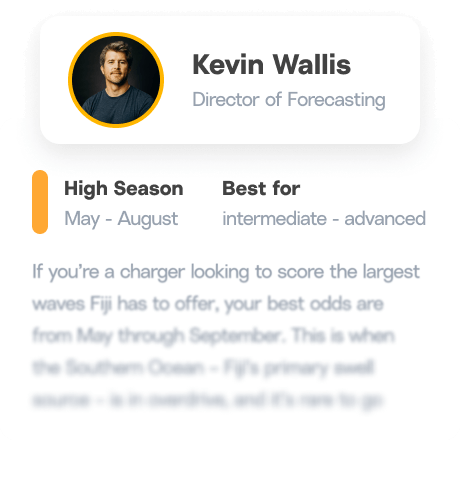
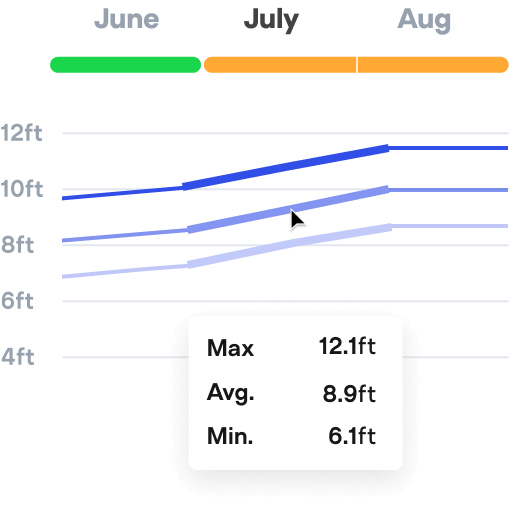
Know exactly when to score — powered by our expert historical forecast data.
Decades of spot-specific swell info — combined with forecaster insights — show your best chance to score, found only on Surfline.
Time to score

Forecaster reports
Seasonal Surf Data

Southwest France According to...
Joan
Duru
French pro and former CT competitor offers insight on his home stretch.
What makes Southwest France a special destination for surfers?
If you come during the good season, you can surf every day. There are many different waves, from the heavy barrels of Hossegor to the small barrels of Culs Nuls. You can get rippable lefts in the afternoon with the north wind, and if you just want to cruise on a fun, long pointbreak, you can go to the Basque Country. There’s something for everyone.
What’s the vibe?
It’s changed a lot since COVID-19. Many people from big towns and other countries have come to live near Hossegor. Real estate has become so expensive that locals can no longer buy homes in the area. There are many people surfing now, and it’s hard to find empty waves, but nobody is really aggressive. There isn’t really any localism. Maybe that’s why things have gotten out of control [laughs]!
What should surfers bring?
Bring a fun shortboard and a good barrel board. I love riding a quad — perfect for paddling and holds well in the tube.
When is the best time to score?
October is the best time, but there are also little windows in the middle of a freezing winter. That being said, it’s hard to find those windows. You never know what you’re going to get in France. The forecast could be perfect, but there could be fog. Or no banks. Or the swell’s too W and it’s closed out.
What else is there to do when you’re not surfing?
The food is so good here — and the wine, of course. Landes Forest is amazing. It’s still wild, there’s a small lake, and the trail is incredible. I love to go mountain biking there. In fact, just bring your bike instead of your surfboard. Or, you can go to Spain for tapas and txuleta.
What’s your favorite local cuisine?
Duck breast, but you have to know how to cook it properly.
Where can people learn to surf?
The best place to learn how to surf is with the Cloarec brothers. They’re former pro surfers based in Penon.
Travel Essentials

Culture & customs
Nestled in the corner left pocket of the country – nearly 500 miles from Paris and at the apex of the Bay of Biscay bordering Spain’s Basque Country – Southwest France is a slice of well-traveled paradise where you’ll find all your stereotypical French scenes: fur-coated cigarette-smoking matrons walking tiny poodles, golden hour café culture and unabashed nudity on white-sand beaches. You’ll also find a thriving surf culture. Downtown Hossegor is a certified surf city, with a range of shops from the Quiksilver megastore to smaller boutiques. The French are a proud people; and that translates to the water, too, so visitors must respect the locals who put in the time at their beloved, thumping beachbreaks.
Local scene
Unless you’re prepared to walk (the beach extends about 130 miles north of Hossegor, but with few access points) or don some serious rubber (winter water temps hover in the mid to high 40s), you’ll be dealing with other surfers, just like in any other country with good surf. The crowds you’ll come across in season (June-October) are a wildly eclectic mix, from traveling pros to talented locals to feral, six-to-a-van, parking lot dwellers. Sometimes it seems like everyone in Europe has ended up in Southwest France, particularly in August when the lineups are littered with all manners of surf craft and ability level. However, if you can avoid the all-night party scene that sucks in so many and hit the surf at dawn, you could be sharing silky barrels with just a few other hearty souls.
What to bring
Select any weapon from your quiver: longboards (Biarritz is best for those), shortboards (on its day, Hossegor offers some of the best beachbreak barrels in the world), step-ups and even guns (Guethary offers legit, open-ocean, Hawaiian-style power) – all boards are welcome, somewhere. If you need gear, you can find pretty much anything you’ll need in Biarritz or Hossegor’s many surf shops. France ain’t cheap, though.
Also: Our amazing partners over at FCS have curated a collection of fine products for your next surf trip. Check it here.
How to get there
Biarritz Airport will drop you right in the thick of it, Bordeaux Airport’s a bit further north. Renting a car is your best bet for exploring the whole zone and hunting for uncrowded peaks. Cars are a little different in Europe – typically on the smaller side – so get a vehicle with a little more legroom that can accommodate your boards and gear. That will also allow you to take cat naps between sessions, or even spend the night at a spot you’ve clicked with. Southwest France has several beachside camping options.
Downtime
This is France, one of the cultural centers of the world. Wining, dining and romance are all on the docket. Indulge in the art scene, watch live music, lean into the magical cafe culture of the area. If your wine hangover isn't too bad in the morning, rent a kayak and paddle around the lake just northeast of Hossegor. Also, it can get maddeningly flat for weeks on end, so if you’re looking for an adrenaline rush, head to one of the bridges over the river and spend the day working on your half-gainers.
Quick Tips
Travel Time
LAX: 12 hrs
JFK: 8 hrs
Heathrow: 1.5 hrs
SYD: 35 hrs+
Connectivity
Cell reception is pretty prevalent in most of Europe’s well-trodden locations. And so is WiFi at hotels, coffee shops, etc. But, if you wanna be fully connected all the time, you’ll probably want to talk with your provider before taking off, so that you can adjust your plan accordingly.
Currency
Euro. At the time of writing, $1 USD = 0.96 EUR
Avg. cost of...
Cup of coffee: $3.50
Lunch: $15.00
Beer: $6.00
Hotel room: $200.00
Visa Requirements
No payment necessary for a visit three months or less.
Drinking water quality
Tap water is considered safe to drink in France.
Hazards
Board-snapping beachbreaks, distracting nudity on the beach, passionate European locals, wine and cheese food comas.
Cash, card, crypto
Most major credit cards are widely accepted in France. A little bit of cash, as always, is a good idea to have on you, too. ATMs are easy to find.
Explore Other Zones


Have feedback on this zone? Let us know [email protected]
Questions about booking with Surfline Travel? Check out our FAQs