East Bali
While the west side of the Bukit Peninsula hosts Bali’s most popular waves, the east side can be just as dreamy — especially during the wet season (November-March) when the winds blow offshore in the area. The east side also provides more opportunity for quality righthanders, otherwise a rarity in Bali, the most famous being Keramas. While this rippable, barreling reefbreak regularly draws many surfers when it’s on, there are plenty of other spots on the east side that are less crowded than what you’d find at Keramas or the Bukit.
The Waves
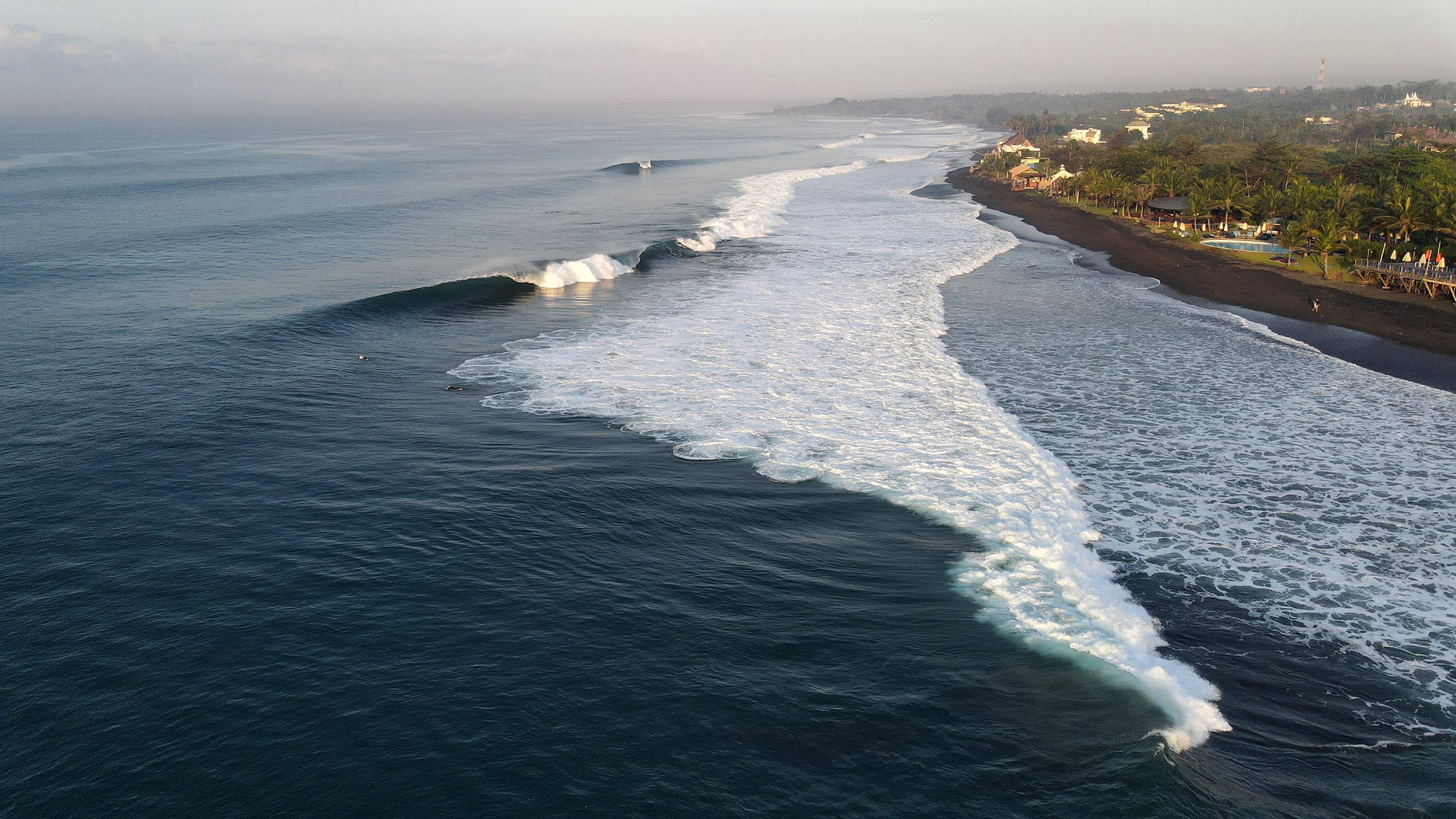
Keramas
Once an ultra-secret hideaway of tightlipped Sanur expats, in the past few years, no other spot has received more media attention than Keramas. Whether it's Andy Irons dropping in out of a Helicopter, or any of dozens of international professional surfers adding a section to the latest surf movie, Keramas is no secret anymore. The good news is that Keramas does live up to its' hype. It's an excellent reefbreak in a classic black sand beach and rice field setting, and.. In a land of perfect lefts, it's one of a few perfect rights. Keramas seems to have a wind of its own and is often different than the prevailing winds at other spots.. Unfortunately Keramas' wind of it's own is often onshore. As such, Keramas is a spot for true Dawn Patrol surfing. First light. After 7am, chances are that wind is going to begin to affect the barrels. Keramas is a fun righthander for hot dog surfing when it is smaller. In the past few years, surfers have been pushing the limits of what is considered too big to surf at Keramas. Even on the biggest days of the year, some local and international chargers have been paddling out there. While some are returning with stories, film, and photos of glory, others are being treated for broken bones, deep reef cuts, and near drownings. Keramas is a heavy wave when it is big, the reef is shallow and sharp, the currents in the end section can be fierce, and it can be difficult to exit the water. Surfers should use extreme caution when considering paddling out in Huge surf at Keramas. To get to Keramas: Follow the signs to Gianyar and turn off onto the new bypass that runs along the black sand coast. A few miles down the road there will be a sign on your right. Park at the warung and walk down the black-sand beach. Unless you want your feet to melt, bring sandals.

Nusa Dua
Nusa Dua is the rainy season bread and butter equivalent to Uluwatu. There's always a wave, and often it's big. Nusa Dua is a swell magnet and sometimes it's too big, in fact Nusa Dua is known to have the biggest rideable surf in Bali, and much of Indonesia. These days, local fishermen offer surfers a lift out to the break for 5,000rp ($0.50). It's a great deal considering how far out the break is, and allows for many people to get out there that would otherwise think twice. Nusa Dua can be a beast of a wave. The wicked current and rogue set waves can wash a surfer down the entire reef before he or she even gets a wave. Nusa Dua is known for big waves, and on its day, giant Nusa is a difficult playing field and only a few local chargers are out there. Visiting surfers should use extreme caution when looking out at what appears to be six-to-eight-foot fun waves with nobody out. The distance of the reef from the beach can be deceiving, and often a surfer will be looking at twelve-to-fifteen-foot dangerous conditions. If in doubt, count how long it takes for the lip of the wave to reach the bottom. In any case, Nusa Dua can be a great wave and is usually a good place to ride a bigger board. Another nice thing about Nusa Dua is the beach. This is a great place to bring the family. Come on down to Tim and Putu's Nusa Dua Beach Bar and Grill and there will be good food, fun tidal pools for the kids, and mom or dad can go out and get a few waves. Click here to download Surfline's Bali Surf Guide pdf.

Sri Lanka
When Nusa Dua is huge and dangerous, it's worth a look at Sri Lanka. This wave is directly in front of the Club Med Resort. Often Sri Lanka is inconsistent and imperfect, sectioning, and offering only a fat end section. However, when it all comes together, this can be one of the best barrels anywhere. When it's on, Sri Lanka is a very challenging wave to surf, particularly on your backside. To make the wave, you need to drop in behind the peak and immediately enter a dredging barrel section. To misjudge this barrel section usually means a trip to a sharp and shallow reef. There's a local crew that is usually on it the minute Sri Lanka starts to work. These guys know the wave inside and out and it can be quite difficult for a visiting surfer to get a set wave. Click here to download Surfline's Bali Surf Guide pdf.

Serangan
Serangan has quite a history. A few years back, Serangan was a peaceful, secluded island, home of one of the most important temples on the island, and accessible only by boat. There was a huge lagoon of shallow water and seaweed farming and way on the outside there were some reef breaks. These breaks were only accessible by boat and this was an ultra secret hideaway of a few expat surfers who would regularly surf the spot by zodiac. In the mid 90s, then-president Suharto's son, initiated a giant development project to turn Serangan into a resort complex. Enormous dredgers were brought in and operated for years. The dredging, combined with a giant landfill project turned Serangan into a peninsula and filled in the lagoon. After this, the project went defunct. Today driving out to Serangan is almost surreal. It's like a trip to the moon, and resembles a giant salt flat. At the end of the road are a few warungs, and a beautiful beach, what's left of the lagoon and waves. Good waves. Serangan is a great rainy season surf spot. There's almost always good rideable surf, there's several different peaks, and it breaks on almost any tide. For the most part Serangan is a group of hot dog waves almost resembling a beach break. However, during a huge swell Serangan transforms into a big, bowling, barreling right-hander. Click here to download Surfline's Bali Surf Guide pdf.
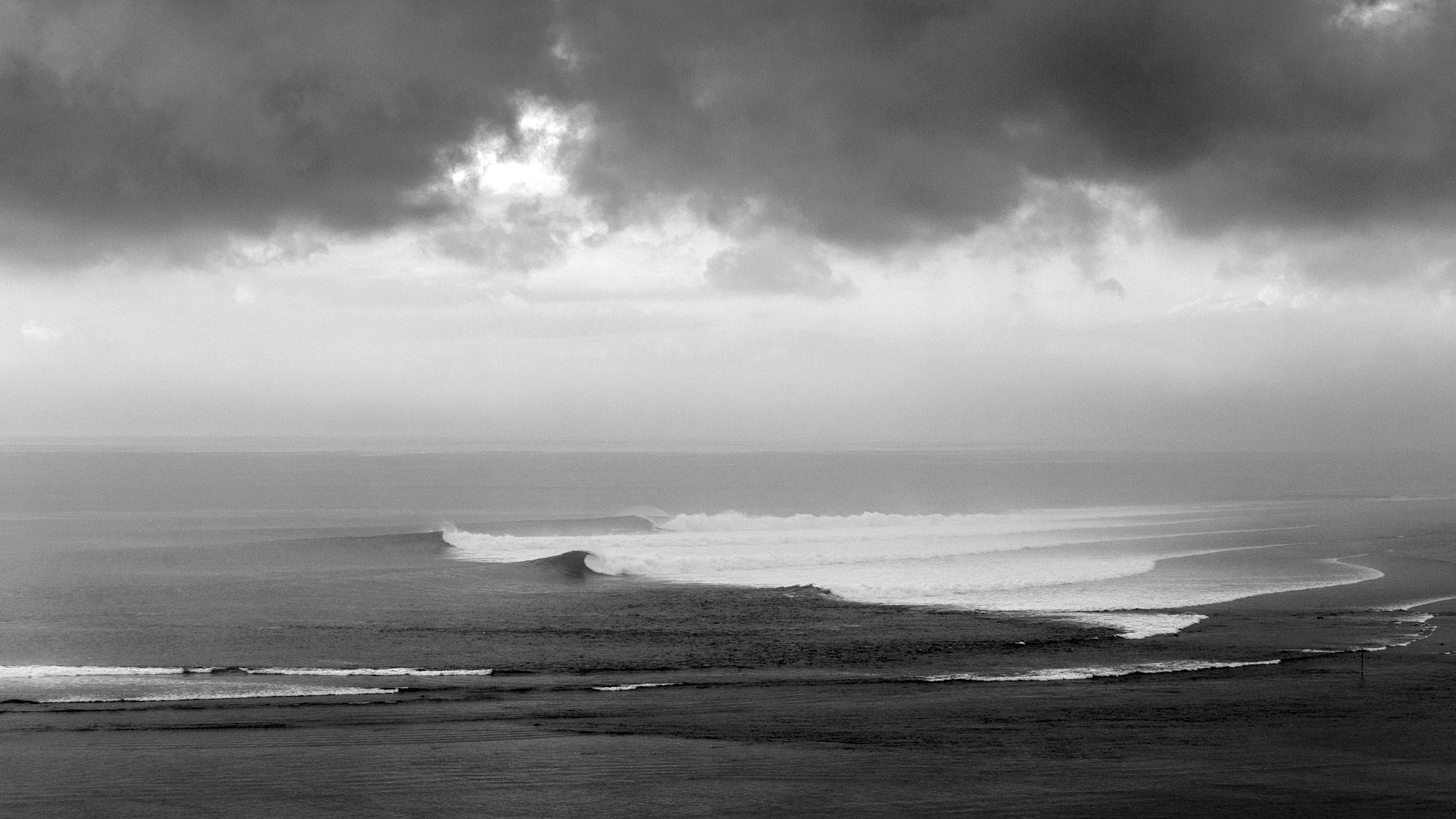
Hyatt Reef
In the Sanur area of East Bali, there are a few reefs, which can be seen from the beach. Just south of Sanur, way out at sea, surfers can catch a glimpse of what appears to be a long, spinning, right-hander peeling along a huge stretch of reef. This is Hyatt Reef. Many days, distance is a friend to this wave, and on closer inspection, what will be revealed is an imperfect, ultra shallow, cluster of sections. However, with a solid swell, and a higher tide, Hyatt Reef can be as good as it looks. There are two main sections to this wave. The outside peak is a shifty, gnarly, beast that can offer up square, perfect barrels just as easily as splat the unsuspecting surfer onto the reef. The inside peak is a more consistent, groomed right-hander that allows maneuvers and sets up for a bowling barrel section. Hyatt Reef can get big, and when it is, it's a heavy place. Another thing worth mentioning about Hyatt Reef is that it's way out at sea, and as such, can be easily wind affected. Best bet is early mornings or glassy days. To get to Hyatt Reef: Coming from Kuta, follow the main bypass towards Sanur. Just after the turn off for Pantai Shindu. Follow this road Jln Danau Tamblingan until you see the Bagus Drugstore. Turn left here and you will arrive at the beach. Click here to download Surfline's Bali Surf Guide pdf.

Sanur
Sanur is a mythical wave in Bali. Surfers living here all have a tale of surfing, seeing, or hearing about the most perfect wave on the island. And, as with most mythical waves, Sanur is difficult to see in this state of perfection. Like its dry season cousin Padang Padang, Sanur requires a huge swell to be hitting the coast. If Nusa Dua is over ten feet, then there's a chance that Sanur could be firing, however, a long drive often ends in disappointment when Sanur is only three feet and slightly onshore. When the swell is hitting Sanur at six feet or more, and the wind is offshore or glassy, and the tide is mid low-high, Sanur can be a world-class wave, as good as anywhere - a long, bowling wave with multiple barrel sections over ultra-sharp living coral. These days become legend. There are two cautions that need mentioning here. One is the reef. It is important for surfers to be aware of the tides. As the tide gets lower at Sanur the end section goes from dangerous but makeable to an almost sure trip for stitches at the local medical clinic. Surfers should know the tides, and when it gets real low, it's better to call it a day. The other thing is, unfortunately, localism. Of all of the waves in Bali, Sanur is the one wave that can have bad localism. This is mainly from one group of surfers who seem to come out into the line up with a chip on their shoulder, and it will be obvious if they are present. Visiting surfers should take care, and if things get heated, it is best to leave it for another day or another place. Click here to download Surfline's Bali Surf Guide pdf.

For me, Bali is like paradise. The waves are good. The people are nice. Everything is cheap. And the food is amazing.

When to Score & Seasonal Surf Data
Know exactly when to score — powered by our expert historical forecast data.
Decades of spot-specific swell info — combined with forecaster insights — show your best chance to score, found only on Surfline.
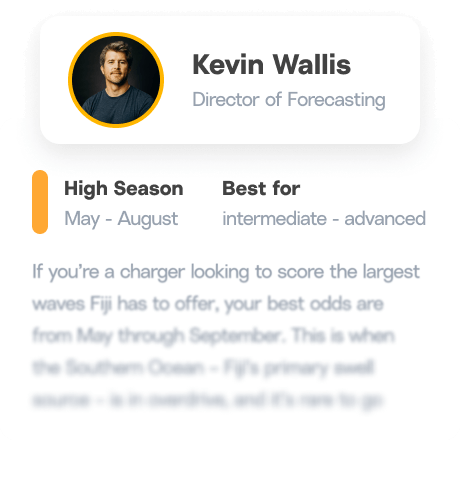
Time to score

Forecaster reports
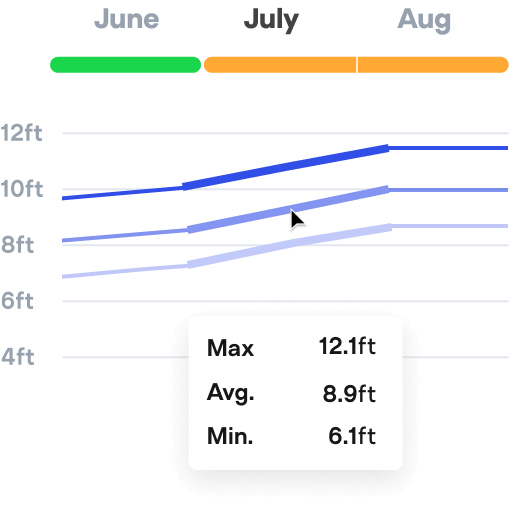
Seasonal Surf Data

East Bali According To...
Betet
Merta
Energetic Balinese pro speaks about his little piece of paradise.
What makes Bali a special destination for surfers?
For me, Bali is like paradise. The waves are good. The people are nice. Everything is cheap. The food is amazing. The accommodations are right on the beach. People love coming here. They stay for two or three months because everything is just perfect.
What kind of waves can visiting surfers expect?
There’s everything here for any kind of surfer. Keramas has gotten to be a pretty famous wave in Bali, and it’s more high-performance. Then there’s Uluwatu. You can surf there every day: high tide, low tide... There’s always a wave of some kind at Uluwatu.
What’s the vibe?
The vibe is mellow right now. After more than two years of the coronavirus lockdown, it’s been pretty quiet. There haven’t been too many tourists lately, mostly a lot of locals surfing. Because the tourism has slowed down so much, and the locals don’t have jobs, they’re just surfing. There’s nothing else to do.
What should surfers bring?
The great thing about Bali is, now, you can get anything you need for surfing right here. There are a lot of good surf shops, so you don’t need to bring a lot. Besides the sponsored pros, a lot of surfers that come to Bali buy their boards here because they’re so cheap. We have everything — Pyzel, Channel Islands, DHD — and when you think about how much it costs to fly with a few boards, it may be cheaper to just get new ones here.
When is the best time to score?
The best time of the year is May through September. The winds start getting good in April and into May, then June, July and August are really good. The season will go into September, too. There are waves here year-round, but that’s really the time that Bali is magic.
What else is there to do when you’re not surfing?
There’s a lot to do around Bali. There’s shopping, restaurants... all that stuff. My friends and I have been doing a lot of training when we’re not surfing. That’s really popular — training so you can be ready for the swells — and there are a lot of gyms. We’re pretty lucky, we have everything here now. It’s not like before.
What’s your favorite local cuisine?
My favorite place to eat, pretty much every day, is at Ours. Rizal has a restaurant here called Wishing Well, and every Friday and weekend they have parties, live music, DJs… It’s pretty cool. The local food is also good, I’ll eat that sometimes.
Where can people learn to surf?
There are a lot of good surf schools and private surf instructors here in Bali. Because there’s so many tourists, it’s not hard to find somebody to teach you to surf. But you want to make sure you do your homework and find the situation that is right for you. If you learn better one-on-one or in a small group, you can do that, and there are also bigger surf schools.
Any other local tips?
Bali has slowed down a lot during the coronavirus, hopefully it bounces back when regulations ease. Because Australia and New Zealand have been locked down, I think we’re going to see a tourist boom when they open back up. If you come here, support the locals. They could use it.
Travel Essentials

Culture and Customs
The Republic of Indonesia is the world’s largest Islamic country with an almost 90% Muslim population; however, the Balinese people are predominantly Hindu, hence Bali’s nickname, “Island of the Gods.” The primary language of the country is Bahasa Indonesia, but people in many areas have their own distinct dialects, and over 400 languages are spoken throughout the islands. Indonesia is rich in natural resources and oil, timber, agriculture, mining, and manufacturing are major industries; however, much of the population lives at or below the poverty level. Indonesia is a republic ruled by an elected president and a parliament.
How To Get There
From Bali’s Ngurah Rai International Airport – located on the inner stem of the Bukit Peninsula – you’ll simply follow the coast east via a few options: taxi or bus (or both), rental car, or simply strapping your gear to a scooter. Use caution on the latter, though. Although two wheels are quite popular on Bali, the traffic can be hectic, if not deadly, in the more populated zones.
What To Bring
Your most high-performance surfboard or your most reliable step-up; first aid for reef cuts; plenty of sunscreen; bug spray, especially during the rainy season (November-March); and all your other tropical surf trip essentials.
Also: Our amazing partners over at FCS have curated a collection of fine products for your next surf trip. Check it here.
Downtime
While Kuta, Canggu and other west side hotspots are known for their party scene, the nightlife on the east side is generally much quieter. But there’s no shortage of things to do when you’re not surfing. The Duta Orchid Garden, the Bajra Sandhi Monument and the Blanjong Pillar, which is the oldest known artifact in Bali dating back to 914 AD, are all worth visiting. And there are numerous outdoor adventure activities: from hiking and waterfalls to snorkeling, scuba and fishing tours.
Local Scene
The east side of Bali still has its share of backpackers, partiers and fair-weather surfers — but to a lesser extent than the west side. Accommodations range from luxury beachfront hotels to dirt-cheap hostels, and the waves summon all types of surfers — from beginners surfing at the appropriate spots at the appropriate times to experienced travelers picking their gems to revered local pros running the joint.
Quick Tips
Travel Time
LAX: 18 hrs
JFK: 22 hrs
Heathrow: 17 hrs
SYD: 7-10 hrs
Connectivity
Decent WiFi everywhere, except for the more rural areas.
Currency
Indonesian Rupiah. At the time of writing, $1 USD = 14,459 IDR.
Avg. cost of...
Cup of coffee: $2.50
Lunch: $10.00
Beer: $4.00
Hotel room: $160.00
Visa Requirements
Get it at the airport for $40.00.
Drinking water quality
Heard of Bali Belly? Not fun.
Bottled only.
Hazards
Stay away from the monkeys, seriously.
Cash, card, crypto
Best to have cash, especially in more rural areas. ATMs are available for Rupiah withdrawal in most urban centers.


Have feedback on this zone? Let us know [email protected]
Questions about booking with Surfline Travel? Check out our FAQs