Gold Coast
Stretching north out of the northern NSW rivers toward the sand islands of south-east Queensland, the Gold Coast is one of the world’s best-known surf zones. From the Tweed River at its southern end, a series of long white-sand beaches and points bend away into the distance, waiting for the next swell to push some of the finest long-lined waves you’ll ever see down their flanks. On top of that, it’s accessible: warm water and (mostly) air year-round, a massive range of accommodation, a big city (Brisbane) and two international airports nearby, and surf for every skill level in existence.
The Waves


Duranbah
D-Bah is just across the Queensland/NSW border and situated near the mouth of the Tweed River. It is a series of A-frame beachbreak peaks that can, banks depending, be world-class. Better and more consistent, even, than the famous Hossegor sand pipes. That said, it's no Puerto Escondido - it can't handle anything over five foot. --Derek Rielly Once you're out of the Kingscliff-Cabarita coastal loop and back on the Pacific Highway, the road heads south through some deep coastal rainforest country. Dairy farms and rural getaways abound, and you just know in some of those deep short valleys, someone's growing something they shouldn't. After a half-hour or so, you'll come across the first (most northerly) turnoff to Byron Bay. It's clearly signposted and hard to miss. A few more minutes and there you'll be, at Australia's most easterly point and most beloved yuppie-hippie-alternative-lifestyle Energy Center -- and almost coincidentally, at a really good location for Surf. For surfers, the "Bay" part isn't what defines Byron -- it's more the Cape, which does in fact stick further out into the Pacific than any other piece of Aussie mainland. Naturally enough, in the process, it has enabled a considerable quantity of surf spots. Let's start with the best known, which is the series of right points and reef/beachbreaks down the Cape's northern side. First, on the tip of the Cape there's Watego's and Little Watego's, kind of a combination reef-sand pointbreak producing slow rights and a beautiful swimming zone, as long as you're not particularly afraid of sea life. (Well, what do YOU think swims around Australia's most easterly point? Not goldfish, that's for sure.) Then the whole thing opens up into The Pass, Byron's serious point -- a long, winding right, dependent on sand distribution, but usually starting close to a top-end rock outcrop and peeling way down toward Clark's Beach over a half mile away. Often the wave gets hollower as it runs. Competition for set waves on good days isn't so much intense as almost impossible; Byron is one of Australia's first post-'60's style Surf Towns, and it's the home of Longboard Rebirth,which means tons of very savvy (and perhaps not-so-savvy) older longboard riders, all out exercising their length at once. Choose sessions wisely and after a good look at who's dominating the lineup. Further down the line of the cape, right opposite the town center, lies the remains of a wrecked ship, drawing to itself a soild sand deposit from the general waterflow along the beach. Creatively known as Shipwrecks or the Wreck, this is a wedged-up wave, occasionally very hollow and a lot of fun. There's a few little beachbreaks between the Wreck and the Pass, but nothing you'd stake a long paddle on. All these spots require an east to northeast swell to really fire. None of 'em pick up much from the predominant southeast swell angle -- not unless it's really big. To cash in on smaller souths, you've gotta head south of the Cape to Tallow Beach, a lovely long clean sand stretch of occasionally superb quality beachbreaks. Protected from the northeast seabreeze, Tallows is the haunt of mobile surfschools, surfing families, and most of Byron's hot young crop, who'll be out there busily emulating Danny Wills; if it's not WCT tour time, Willsy'll likely be out there too. Way off down the other end of this stretch, several miles away past the small town of Suffolk Park, lies Broken Head, Byron's gorgeous semi secret flankpoint. Best in an east swell and a south wind, Broken's unpredictable sandbar is at times a unique long right barrel. You may not be able to count on it, but as the saying goes: if you ever get it, you'll never forget it. Oh yeah: be aware of sharks at every location. Byron was once a meat processing and whaling town, and the genetic memory of all that blood still lingers in the regional aquatic food chain. A great white took a scuba diver off Julian Rocks, the boulder outcrop a mile or so off Wrecks, less than a decade ago, and there were plenty of attacks before that. So don't be shark-dumb.


Currumbin Alley
Visible from the Gold Coast Highway is Currumbin's famous point, The Alley. Nowhere near as famous as Burleigh, Kirra or Snapper, the Alley can be as good or better - particularly when it's big. Watch out for the rocks on the take-off and be careful negotiating the rock jump. If in doubt, paddle out from the beach on the south side.

"The waves in the area appeal to all abilities of surfers from beginners to professionals. You can't miss on a surf trip here."

When to Score & Seasonal Surf Data
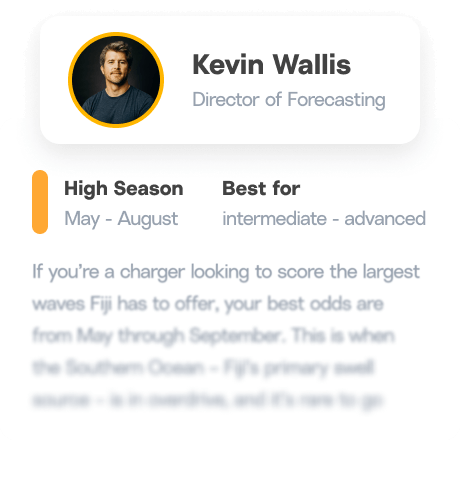
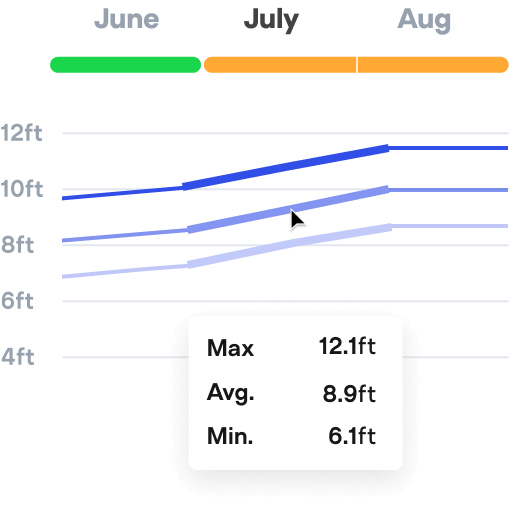
Know exactly when to score — powered by our expert historical forecast data.
Decades of spot-specific swell info — combined with forecaster insights — show your best chance to score, found only on Surfline.
Time to score

Forecaster reports
Seasonal Surf Data
Gold Coast According to...
Marlon
Harrison
Up-and-coming Goldie punter shares some unique perspectives on his hometown.
What makes Snapper Rocks a special destination for surfers?
Snapper is a fantastic location for a surf trip. Heaps of cheap flights from everywhere. Close to the airport for easy access and minimal travel. Loads of accommodations for all budgets close to Snapper and D-Bah, so you don’t even need a car, you can walk everywhere. Consistently warm water and bucketloads of sunshine year-round. The water is usually swimming pool-clear and 20-27 degrees Celsius. Absolute bliss! Lots of great eating spots like Little Mali at Rainbow Bay and Coolangatta, but the biggest draw is the consistency of the surf. It’s like a wavepool. The waves in the area appeal to all abilities of surfers from beginners to professionals. You can't miss on a surf trip here.
What kind of waves can visiting surfers expect?
A surfer visiting my neck of the woods can expect a lot. It breaks almost every day of the year. During the cyclone season it pumps for weeks, often six-to-eight-foot barrels from Snapper all the way through to Kirra…incredible. But the waves are consistently two to three-foot, clean and glassy. You can surf all day every day if you want at either Snapper, Kirra or D-Bah. You don’t even worry about the tides, just head out whenever you feel like it. There’s waves behind the rock for the experts and great cruiser waves at Rainbow and Greenmount for novices. It really does have something for everyone, no matter your ability. Even when it’s onshore, there are still plenty of surfable waves on offer.
What’s the vibe?
Snapper has an amazing, multicultural vibe. We have people from all over the world living in the area. It can be busy and sometimes ridiculously crowded, but a single wave out there can be worth the wait: the best wave of your life. It’s so long you can get multiple barrels on one wave. Most of the time everyone is just doing their thing. There are usually plenty of waves on offer. When it’s a pumping cyclone swell, it's pretty intense, but normally it's pretty mellow. We are used to lots of visitors enjoying our amazing part of the world. That being said, some people can be over the top. My best advice is don’t drop in, and that goes for anywhere really. Then you will have nothing but laughter and smiles.
What should surfers bring?
You should definitely bring sunscreen, the sun can be intense. I take my sunscreen and sunnies everywhere. In the summer you just need boardies and a vest for the sun. In the winter, I wear a 3/2mm steamer, more for the windchill than the water temp. Board-wise, if the forecast is small a funboard or twinnie will do. For cruising, a 6’10” mid-length is a wave magnet and still loose for hotdogging conditions. When it’s two to three-foot, high-performance equipment would be the pick. Epoxies are a good choice for up here. And if a cyclone swell is on its way, a step-up is definitely worth packing. It’s a huge plus that we have Boardriders and Kirra Surf in Coolangatta. They have everything you could need, including a huge selection of stock boards, wetsuits and essentials from all the major brands.
When is the best time to score?
You could come anytime and score. Cyclones are normally from November to April, so that time of year is always full of promise. With swell forecasting you can just pick your times. My favorite months are April and May — glassy conditions with good swell and perfect weather — and that’s the offseason up here, so it’s relatively quiet. But cyclone season is the best. One Kirra barrel is enough to satisfy even the fussiest surfer for a while. The best part is, even if you don’t score epic swell, you will get plenty of water time and waves. A big win for any traveling surfer.
What else is there to do when you’re not surfing?
When I’m not surfing, I love hanging with my mates, playing golf and cruising the coast. There’s always something going on. Everyone is always out and about enjoying the sunshine. I love that you can surf early, then head out to the hills and waterfalls, markets, golf course, or ride your bike, skate or just hang in the sunshine with your friends and family. You are only limited by your imagination.
What’s your favorite local cuisine?
My post-surf staple is Acai bowls from Little Mali or Protein Shake in Coolangatta. They have really good coffee, too. Dinner would have to be Mexican, Osushi or Rainbow Bay SLSC for a balcony parmy at sunset.
Where can people learn to surf?
There are loads of surf schools in the area. I would recommend Surfing Services. Mark and Bianca Richardson, who have an incredible setup. They coach beginners right up through to professionals. Whatever your level, they can bring out the best in your surfing. Richo is my coach and he also coaches CT surfers Isabella Nichols, Callum Robson and Liam O’Brien. If you want to be your best, see the team at Surfing Services.
What are some things people should be aware of when it comes to local culture and customs?
Snapper is the same as everywhere else. If you are disrespectful you will not get a lot of joy. The local Snapper crew are accepting of visitors, but fiercely protective of their own. Show respect and you will get respect. Burn a local and it won’t be pretty. Always look inside and don’t drop in. Only leave footprints on the beach. Take your litter home. Bring positivity to the surf.
Any other local tips?
Often you can surf for longer than normal with the water and weather being so perfect and comfortable. Make sure you wear sunscreen, hydrate and eat up. You will do some serious water time in the area. You could literally surf all day. Bring your stoke, surf your heart out and enjoy the spoils of the Goldie.
Travel Essentials

Culture & customs
The Gold Coast is rapidly urbanizing, with hundreds of thousands of people on its doorstep and a massive tourism trade. Yet it still has country-town roots, visible now and then in old beach shacks tucked between luxury holiday apartments, and in the casual way people go about their days in and out of the water. Very few parts of the world have such a surf-soaked population as does the “Goldie”, and its considerable surf-star membership are pretty much royalty here. But while some spots - like “behind the rock” at Snapper on a good day, or big Kirra - are double-black-diamond stuff with a crew to match, there are fun waves everywhere on this coast just waiting for riders, and plenty of people just out there for fun.
Local scene
Beach life is almost the only life on the Gold Coast, and there’s a surfer in every family — heck, usually it’s the whole family. Everywhere there’s the classic community combo of boardriders’ club and volunteer surf rescue club, and thousands of surfers who belong to neither, but just get in the water as part of their daily routine. Maybe because of this, Gold Coast surfers are generally fairly relaxed about crowding and happy to make acquaintance with a friendly stranger. Despite the numbers in the water, as a visitor, you’ll find a surprising amount of space in surf zones once you’re away from the super-legendary spots, like Snapper and Greenmount, and even there, with patience, you’ll find a wave or two to yourself.
What to bring
Any board you feel like riding. You’ll find a wave for it, unless it’s a high performance gun — this coast rarely sees rideable surf past two or so times overhead. There’s so many board-makers and surf shops here, you might feel like spending some money on the local product, which by and large is extremely high quality and good value. There’s not an overwhelming need for rubberwear here, you’ll overheat in a 3/2mm full suit on all but the coldest mornings, and a half-cut suit — spring suit or short arm full — will do most of the time through winter months. Sun protection is critical, so long-sleeve vests and surf hats are worth packing.
Also: Our amazing partners over at FCS have curated a collection of fine products for your next surf trip. Check it here.
How to get there
Fly into Brisbane International Airport from every major hub in Europe and the Americas. From there it’s only 60 miles to Coolangatta.
Downtime
So many options. Drive a half hour south and find yourself in lush sub-tropical countryside, half-empty surf zones, and Byron Bay. Fly an hour north and you’re in some of the world’s best coral reef dive zones along the World Heritage-listed Great Barrier Reef. In between lie the spectacular sand islands of Stradbroke and Fraser, and the Sunshine Coast, another fantastic surf zone in its own right. Surfers Paradise, at the northern end of the Goldie, is doing its best to swing the world class tag off numerous restaurants and resorts, and the actual city — Brisbane — is 80 minutes’ drive on a bad day.
Quick Tips
Travel Time
LAX: 14.5 hrs
JFK: 20 hrs
Heathrow: 21 hrs
Sydney: 1.5 hrs
Connectivity
This is a major metropolitan area. Abundant WiFi and reliable cell reception are a given.
Currency
Australian Dollar. At the time of writing, $1 USD = 1.41 AUD
Avg. cost of...
Cup of coffee: $3.00 / $5 AUD
Lunch: $15.00 / $21 AUD
Beer: $6.00 / $9 AUD
Hotel room: $200.00 / $280 AUD
Visa Requirements
Yes. A visa is required to visit Australia for 90 days or less. A fee may be applicable depending on what type of travel you intend to do (business or holiday) and how long you plan to stay.
Drinking water quality
Some of the cleanest in the world.
Hazards
Sunburns, noodle arms and legs from laps up and down the points, dropping in on the wrong local, petty theft, indulging in the nightlife and missing the dawn patrol.
Cash, card, crypto
Credit cards are widely accepted, and access to ATMs is readily available.


Have feedback on this zone? Let us know [email protected]
Questions about booking with Surfline Travel? Check out our FAQs